When I was doing this work, the disclosure checklist was the part of the engagement nobody looked forward to. The statements were drafted, the numbers tied out, the team was tired, and then someone still had to sit down with a checklist that runs hundreds of questions and work through every one. Yes, No, N/A, for a document that can stretch past 600 pages. It was the last required step before the file could go out, and it always seemed to land late at night, on the desk of someone whose time was worth far more than the task in front of them.
What made it heavy was the mechanics. You'd answer a question, then go hunting through the financial statements for the disclosure that supported it. You'd validate, cross-check, and document, over and over. Firms often spend as much time locating the supporting disclosure and validating each response as they spend answering the questions in the first place.
It stays this way for a simple reason. The checklist has always lived apart from the financial statement it's checking. It's a separate tool, sometimes a separate PDF, disconnected from the financial statements that hold every answer. So the work becomes a manual reconciliation between two things that should have been connected all along: the checklist and the statements it's meant to verify. That's hours of staff, manager, and partner time spent on retrieval and matching, not on the questions that actually call for professional judgment.
"We need a disclosure checklist that actually integrates with our workflow. Today it's a separate, manual step that drives rework and slows every engagement."
Gina Rubega, Principal, Financial Assurance, Wolf & Company
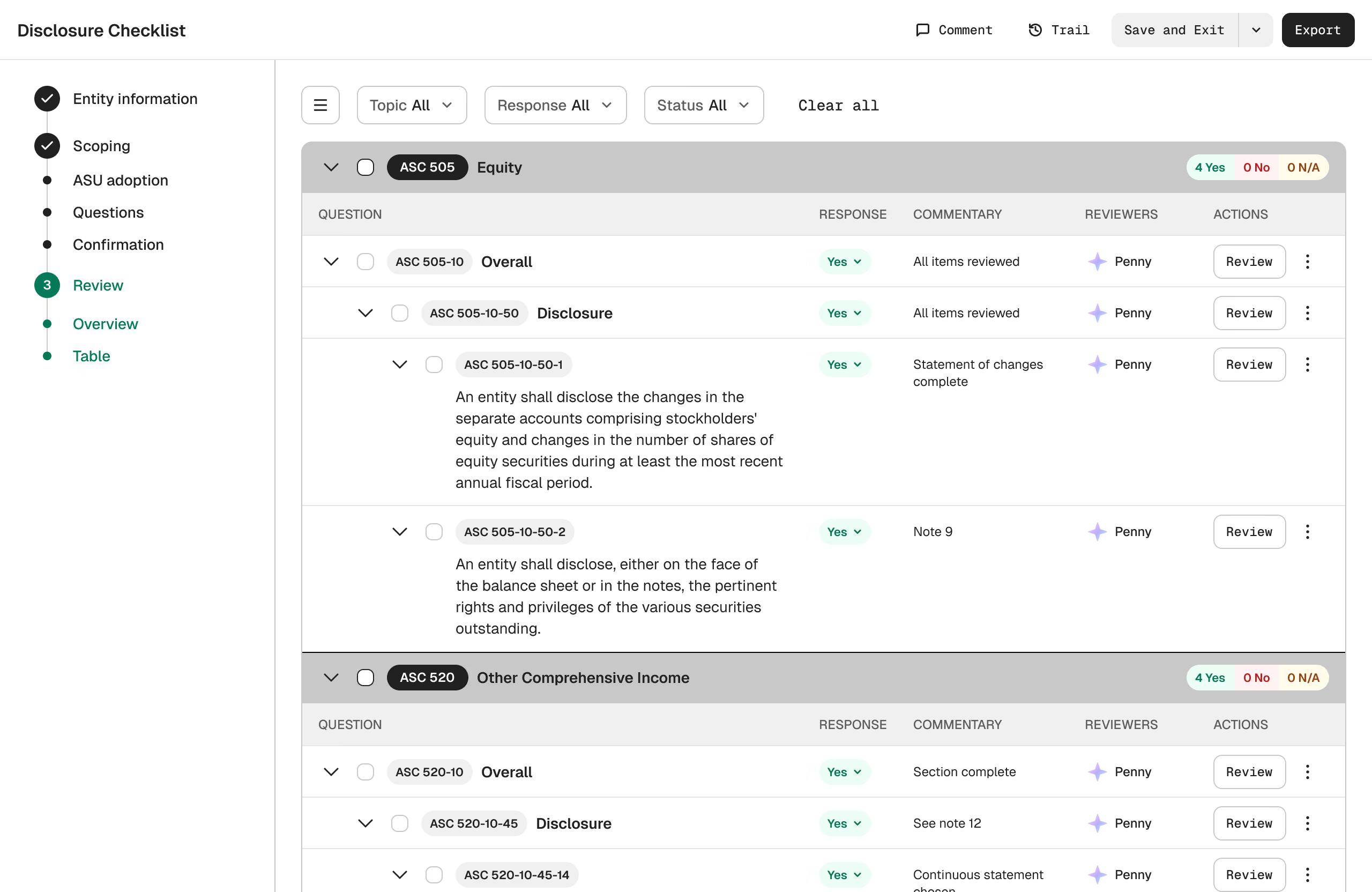
This is why we built the Agentic Disclosure Checklist. Penny (our AI Agent) analyzes the financial statements draft, evaluates the disclosure requirements that apply, and produces a review-ready checklist.
Here's how it works:
- Penny reads the financial statement to scope the checklist to that specific client, weighing what appears on the face of the financials against what's disclosed in the footnotes to decide which disclosures apply, flagging the lower-confidence ones for a closer look. There's no questionnaire to fill out.
- Penny then works through the applicable disclosure requirements, drafting a response for each one with the rationale behind it.
- Every answer is linked back to the exact section of the financial statements that supports it.
The 4 to 8 hours of staff, manager, and partner time that a checklist typically pulls per engagement no longer go to mechanical completion and retrieval. They go to the exceptions, the judgment areas, and the final sign-off, the part of this work that actually needs a qualified person. The work doesn't disappear. Penny takes the first pass, and your team reviews. What changes is where the team spends their time.
It also means consistency stops depending on who staffed the job. Every engagement is worked through the same way, scoped and documented to the same standard, across offices and teams. And because every answer traces back to its source, you're left with a clear compliance trail rather than a checklist that sits in a folder, disconnected from the statements it was supposed to verify.
The disclosure checklist has been a manual reconciliation for as long as I've been in this profession. It doesn't need to be. When the checklist is built on top of the financial statements instead of beside them, the answers come with their evidence attached, and the work that's left is the work worth doing.
This is one of the launches we are proudest of at Inscope, and it's the way the disclosure checklist should have worked all along. We can't wait to get it into our customers hands.