Every firm I've worked with has the same unwritten process for disclosure management.
You're assigned to a new client. There's a fact pattern you haven't seen in a while: a complex revenue arrangement, a debt modification, a going concern consideration. You need a disclosure template that meets requirements. So you think about who at the firm has seen something similar. You ask around. They point you to a client binder from last year. You open that engagement, find the note, copy the language, and adapt it.
This is how firm knowledge works in most places. It's tribal. It lives in the heads of the people who've been there longest. When those people are out, the knowledge is out. When they leave, it leaves with them.
Every firm knows this is a problem. Most have tried to solve it. The usual attempt is a shared drive of templates, assembled once, never updated, and quietly ignored within a year because no one trusts that the language still reflects what the firm actually does.
The reason those attempts fail isn't lack of effort. It's that they're built the wrong way. A real disclosure library can't be a snapshot of what the firm used to do. It has to be a living reflection of what the firm actually does, right now, across the engagements going out the door.
Every firm wants a disclosure library. Almost no firm has the bandwidth or resources to sit down, comb through years of engagements, and build one from scratch. The work is real, and it's nobody's day job. So it doesn't get done.
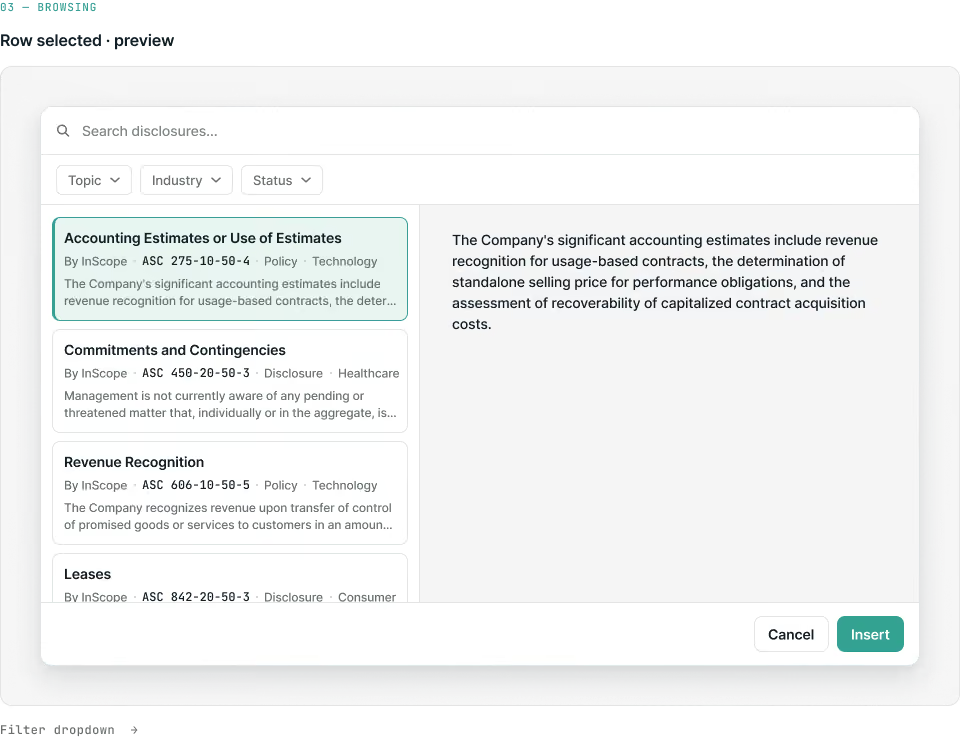
This is why we built the Disclosure Library. It's one place where a firm's disclosure language lives, searchable, governed, and ready to drop into any engagement. Firms can:
- Start with Inscope's templates, built from FASB guidance.
- Upload your existing precedent in bulk.
- Let Inscope’s AI Agent read across the previously issued financial statements you already have in Inscope and propose firm-specific templates from your own actual disclosures.
As a part of implementation, we set up your first disclosure library for you, using your own data. You don't have to find the time. Your historical financial statements become the input, and we get you to a working library you can review, refine, and publish.
The AI isn't inventing language from a generic model. It's reading what your firm has already written, across real engagements, and surfacing the patterns. A partner reviews, refines, publishes. The firm's own precedent becomes the firm's own library.
Only owner-level users at the parent org can create or publish templates. Everyone at the firm can access and insert them. Every change is logged. That's what it takes to turn tribal knowledge into firm intelligence that holds up.
A firm's disclosure repository is one of its most valuable institutional assets. It should live somewhere real: searchable, governed, and built from the firm's own best work. That's the Disclosure Library, and we're excited to get it into customers' hands.